Patricia Okello, 23 years, Ugandan model, now based in South Africa and shortly NYC – the Big Apple.
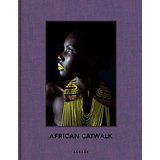
Patricia stars on the cover of African Catwalk, a beautiful fashion book by Swedish photographer Per-Anders Pettersson. Bravo Patricia, by your intelligence, passion, sheer grit and beauty you made it from Kampala to Manhattan.
Once again the old adage holds true – Where there’s a will there’s a way.
PATRICIA OKELLO – FUTURE FASHION ICON – made in Africa.
C R E A T I V I T Y in the D R A M A T I C A R T S
APARTHEID’S evil regime of 50 years locked down all political protest.
Because of this oppression there was an incredible flowering of the arts, by necessity, subtly subversive.
The theatre exploded with the Welcome Msomi zulu production of Macbeth in the 60’s, which he told me would be understood by Zulus as being anti-Apartheid. It became nationally and then globally famous.
The play-writing and acting trio of Athol Fugard, Winston Ntshona and John Kani with The Island, Sizwe Banzi is Dead, (South Africa’s own Samuel Beckett), really pushed the envelope, but were never banned, because of the cerebral content that was lost on no-one but DID NOT break the law. John Kani also played an unforgettable Othello, even Apartheid couldn’t ban William Shakespeare.
C R E A T I V I T Y in M U S I C
Miriam Makeba on her first world tour had her passport torn up and was cruelly banned from returning to South Africa. We all knew by heart her songs of longing for freedom, as those of the torch singer Brenda Fasse who lived to embrace Madiba at the abolition of apartheid. There were many, many more musicians for freedom Julian Bahula of Black Malombo, Dollar Brand’s African Sketchbook and of course the white Zulu warrior Johnny Clegg who wrote and performed the global tear-jerker Asimbonanga.
C R E A T I V I T Y in L I T E R A T U R E
The pen is mightier than the sword – Nadine Gordimer, André Brink’sLooking on Darkness, Alan Paton with Cry the Beloved Country, BreytenBreytenbach and others mocked, ridiculed Apartheid and it’s vile racism. More, their words and emotions wormed their way into their readers’ hearts to plant the uncomfortable seeds of denial.
C R E A T I V I T Y in V I S U A L A R T S
Walter Battiss, my professor of Art was the supreme jester. An early fan of graffiti he slashed the the racist rigidity with his superbly seditious, sometime inter-racial sexual, camel-hair paint brush.
SO WHAT IS OUR CONCLUSION?
This volcanic outburst of creativity by women, men, black, white, brown was the ONLY non subvertly political expression possible. Television was banned, the Beatles were banned, an English cricket team with a black player was banned, Bobby Kennedy was banned outside the university precinctand on and on.
But you cannot ban people from thinking, from writing, drawing, singing, making music. And this is precisely what happened in the creative hothouse that Apartheid unintentionally produced and thereby imploded.
« By the delicate, invisible web they wove – the… mystery of freedom » T.S.Eliot.
I am 4 years old. When I grow up I want to be an airline pilot, heavyweight boxing champion of the world, president of my country. Why does the white man hold me back?
Today 5000 girls, some as young as 12, are exported into prostitution in Italy.
They come from Benin City, Nigeria where they have been sold by their family – a mother, brother, sister, cousin. . . to human traffickers, with the promise of work in Italy.
This starts with a ceremony where a juju priest gives the girl a strong drug, strips her, cuts her pubic hair and makes her swear an oath of obedience – otherwise the curse will kill her.
She agrees to pay a debt of as much as 30.000€ to the trafficker for taking her on a 3000 km perilous life threatening passage through Libya and on in a rickety boat or rubber dinghy to Italy. She survives in the freezing wet misery of serial rape and being robbed during the journey.
She is promised a job – but not told that this is to be a prostitute.
On arrival she is taken in charge by a madam and forced to « service » up to 20 men day and night. If she refuses she is beaten, if she doesn’t hand over her meagre earnings she is beaten, if she tries to run away she is beaten, starved or killed…
She survives in terror and humiliation – frightened of her shadow, of the juju curse that can kill her. Knowing that over 3 to 7 years she must repay the cursed debt or her family will suffer.
You may have seen her one evening outside a Gas Station in a small Italian town, looking for a John.
Some escape and are taken into care for a re-integration programme. A few make it back to Nigeria and a new life. Catholic volunteers try to bring them comfort and help to escape.
Most don’t make it.
The International Labour Organisation estimates that there are 21 million victims of forced labour, of which 4,500,000 are sex slaves. Increasingly girls and young women are profitable merchandise, for labour, prostitution, forced marriage, organ theft…
The Financial Times has launched an appeal with « STOP THE TRAFFIK » to help these victims of human traffickers.
YOU CAN HELP STOP THE ENSLAVEMENT OF OUR DAUGHTERS


 TIME 4 AFRICA